

Dye sublimation has revolutionized the world of personalized products, high-end apparel, and soft signage. However, as any seasoned professional knows, moving a vibrant design from a computer screen to a polyester fabric or a rigid substrate can be a technical challenge. This is where the intersection of high-end hardware and precise color management becomes critical.
To achieve repeatable, sellable results, you need a workflow that treats color as a science, not a guessing game.
Why Color Management is Critical for Dye Sublimation
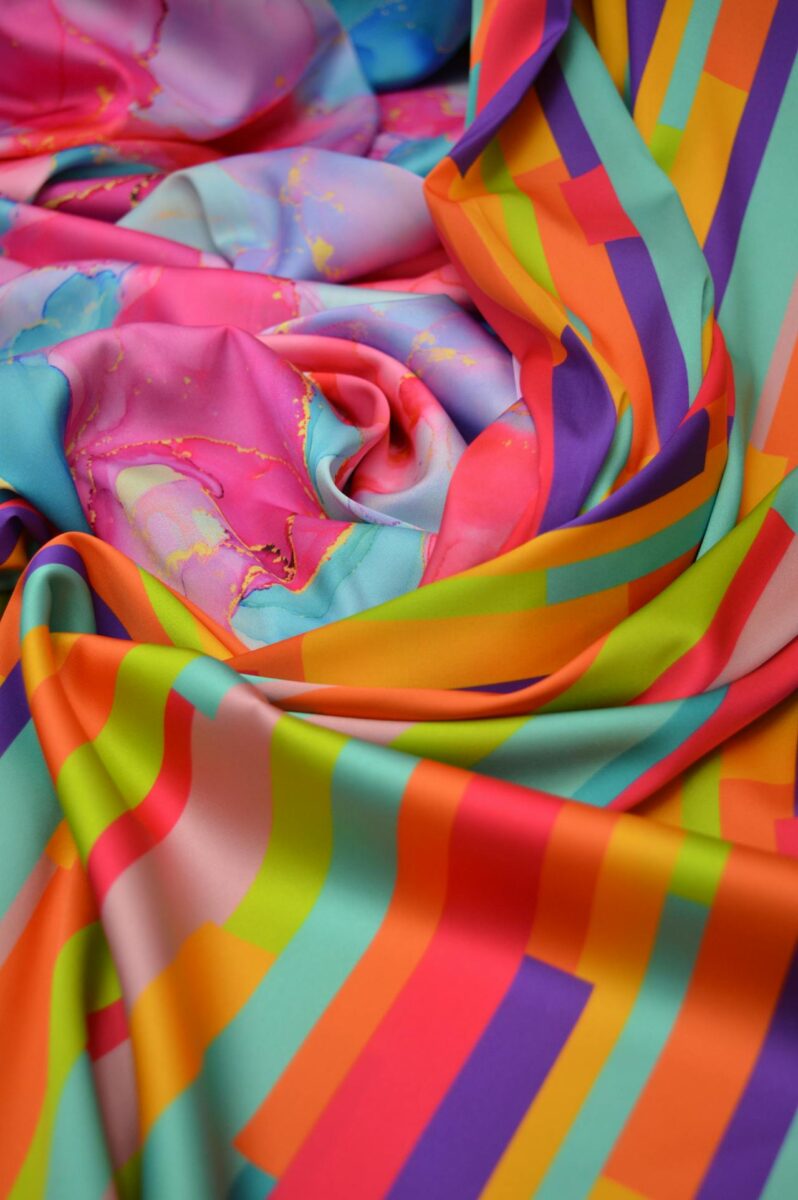
Unlike traditional inkjet printing on paper, dye sublimation involves a heat transfer process where ink turns into gas and bonds with the fibers of the substrate. This transformation can cause significant color shifts depending on the heat press temperature, dwell time, and the specific coating of the material.
Proper color management—specifically the use of custom ICC profiles—ensures that your “Screen Red” doesn’t become “Brick Orange” during the transfer. By using calibrated tools and professional RIP software, you can ensure that your Epson printer delivers the exact spectral data required for a perfect match every time.
Industry Standard: Epson Dye Sublimation Printers
When it comes to out-of-the-box reliability and color gamut, Epson remains the industry leader. Their SureColor F-Series printers are designed from the ground up for dye sublimation, featuring PrecisionCore TFP printheads and UltraChrome DS Ink technology.
Featured Models at ColorManagement.com:
Epson SureColor F170: The perfect entry-level desktop solution for small-format awards, mugs, and personalized goods.
Epson SureColor F570: A 24-inch powerhouse that brings professional-grade sublimation to a compact footprint, ideal for apparel and promotional items.
Epson SureColor F6470: A 44-inch high-production printer designed for speed, reliability, and world-class color reproduction.
Tools for Sublimation Accuracy
Beyond the printer, your “best color” depends on the tools you use to measure and maintain it. Sublimation often requires measuring textured fabrics or backlit materials, which necessitates specialized hardware capable of handling diverse surfaces.
Essential Support Hardware:
i1 Pro 3 Plus: This device features a large aperture specifically designed for measuring textiles and uneven surfaces, making it a staple for sublimation pros.
Barbieri Spectro LFP qb: The gold standard for automated reflection and transmission measurement. It is specifically engineered for large format, flatbed, and industrial printing on materials like textiles, glass, and wood.
Professional RIP Software: Solutions from Fiery, Onyx, or Caldera allow for granular control over ink limits and color mapping, which is vital for sublimation.
Heat Presses & Calibrated Transfer Equipment
The physical transfer step is just as critical as the digital profile. A reliable, high-precision heat press ensures uniform temperature and consistent pressure across the entire platen, preventing cold spots, ghosting, or uneven dye activation.
Heat Presses: Industrial swing-away, flatbed, and specialized mug/cap presses designed to deliver stable temperature and calibrated pressure control for accurate sublimation transfers.
Expert Support: The Color Management Group (CMG)
If you find that your sublimation colors are dull or inconsistent, you don’t have to troubleshoot alone. Through the Color Management Group Consultant Directory, you can connect with vetted professionals who specialize in sublimation workflows.
These experts provide on-site training and remote support to help you calibrate your heat press and printer as a single, unified system, ensuring your production remains efficient and your customers stay happy.
Optimize Your Production Today
Ready to take your sublimation quality to the next level? Start with the right hardware and back it up with professional color science.